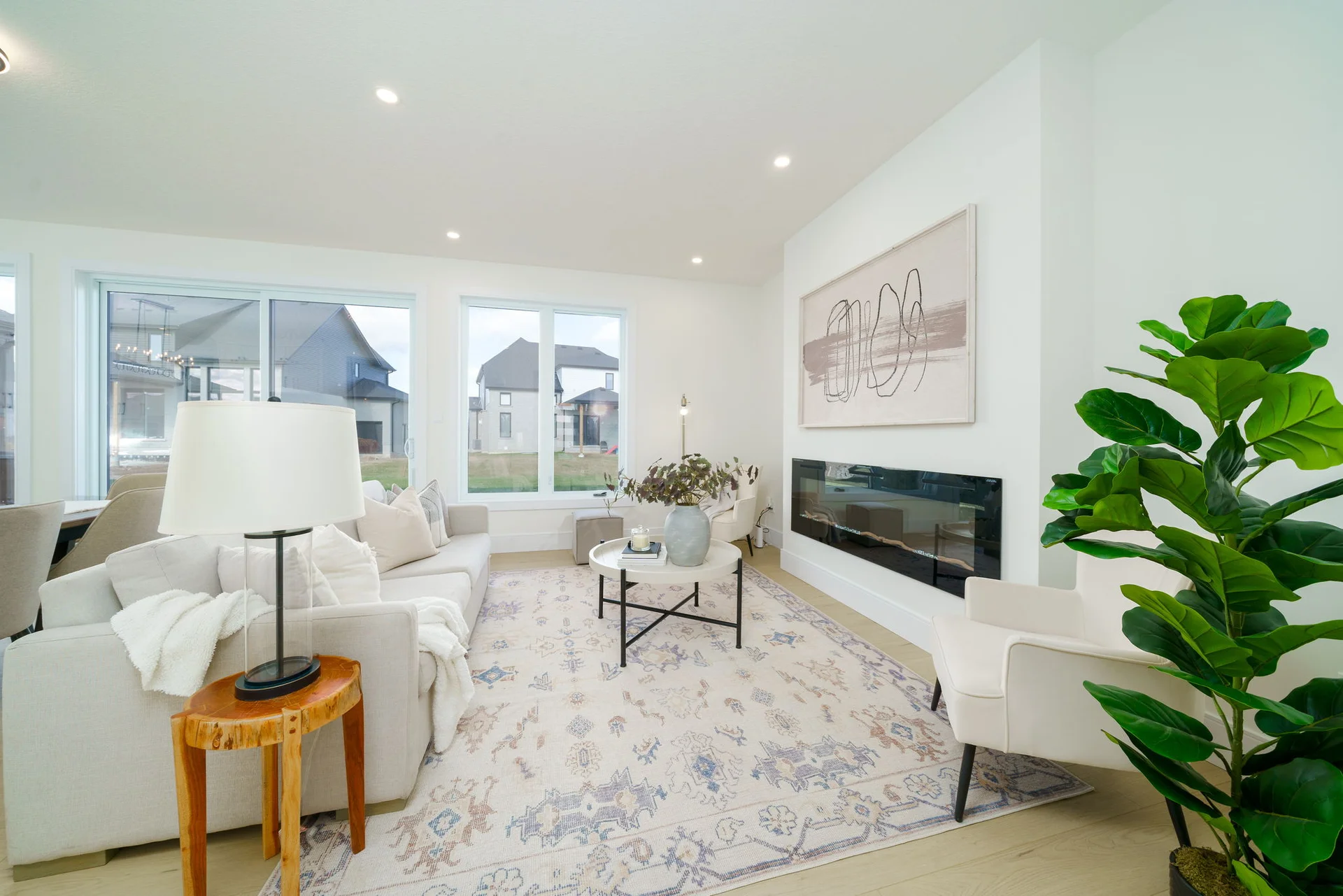
The 2026 guide to building a high-performance home
What a NetZero build involves in Ontario: insulation and air-sealing, heating and solar, real costs, and the questions to put to any builder.
Why this guide exists.
Most homebuyers in Ontario don't know what questions to ask their builder. They compare granite countertop options and flooring finishes — but never ask about air changes per hour, continuous insulation, or how moisture moves through their walls.
The result? Homes that look beautiful on closing day but leak treated air at 3-4x the rate they should, develop moisture issues within a decade, and cost thousands more per year to heat and cool than they need to.
This guide is designed to change that. Whether you're building a new custom home, renovating an existing property, or evaluating builders — this is your framework for understanding what separates a high-performance, NetZero home from a code-minimum build.
Understanding Building Science
The study of how heat, air, and moisture interact within a home's building envelope. Understanding these principles is the foundation of every high-performance home.
Heat always moves from warm to cold — your envelope must control this transfer
Moisture is the silent destroyer — uncontrolled vapour diffusion causes mould, rot, and structural failure
Air leakage accounts for 25-40% of heating and cooling costs in conventional construction
Building science is not an upgrade — it's the non-negotiable foundation of responsible construction
The Building Envelope
Your home's envelope — walls, roof, foundation, windows, and doors — is the primary defense against Ontario's extreme climate. A high-performance envelope is continuous, airtight, and thermally broken.
Continuous insulation (CI) wraps the entire structure, eliminating thermal bridges through framing members
Effective R-value matters more than nominal R-value — a 2x6 wall rated R-19 often performs at only R-13
Double air barriers with taped seams and gasketed penetrations are essential for airtightness
Triple-glazed, argon-filled windows with low-E coatings reduce heat loss by up to 50% compared to double-pane
Airtightness & the ACH Standard
Air Changes per Hour at 50 Pascals (ACH50) is the single most important metric for measuring a home's performance. The tighter the envelope, the more control you have over comfort, efficiency, and indoor air quality.
Ontario Building Code minimum: ~3.5 ACH50. Industry average new build: 2.0-2.5 ACH50
Starlit Homes guarantees 1.5 ACH50 or better on every home, verified by mandatory blower door testing — our portfolio average is 0.85
Passive House standard: 0.6 ACH50 — achievable with advanced techniques and attention to detail
Industry estimates suggest each full-point ACH50 reduction saves roughly $500-$1,200 annually in heating and cooling costs in Ontario's climate
Indoor Air Quality & Ventilation
A tight envelope demands mechanical ventilation. Energy Recovery Ventilators (ERVs) provide continuous fresh air while recovering 75-85% of the energy from exhausted air — ensuring your home breathes without wasting energy.
ERVs exchange stale indoor air for filtered outdoor air 24/7, removing pollutants, CO2, and excess humidity
HEPA-grade filtration removes 99.97% of particles including pollen, dust, and PM2.5
Balanced ventilation prevents negative pressure issues that can draw radon, soil gases, and garage fumes indoors
Smart ventilation controls adjust airflow based on occupancy, humidity, and outdoor air quality
Climate Systems & Heat Pumps
Cold-climate heat pumps are the most efficient heating and cooling technology available. Paired with a high-efficiency gas backup, hybrid systems deliver optimal comfort across Ontario's -30°C to +35°C temperature range.
Air-source heat pumps deliver 3-4x the energy they consume (300-400% efficiency vs. 95% for gas furnaces)
Modern cold-climate units operate efficiently down to -25°C, covering 95%+ of Ontario's heating hours
Hybrid systems automatically switch between heat pump and gas backup at the economic crossover point
Combined with a tight envelope, heat pump systems can reduce heating costs by 50-70% compared to conventional
Radon & Soil Gas Protection
Radon is a naturally occurring radioactive gas and the leading cause of lung cancer among non-smokers. Every high-performance home must include active radon mitigation as standard — not as an afterthought.
Health Canada recommends action at 200 Bq/m³ — 1 in 5 Ontario homes exceeds this threshold
Sub-slab depressurization systems cost $500-$1,500 during construction vs. $3,000-$5,000 as a retrofit
Continuous vapour barriers and sealed slab penetrations prevent soil gas entry into living spaces
Post-construction radon testing should be conducted for a minimum of 91 days during the heating season
NetZero Construction
A NetZero home is designed and built so that it can produce as much energy as it consumes annually with the addition of a renewable energy system. Starlit Homes builds every home to the CHBA NetZero standard.
NetZero means the envelope and systems are optimized — solar panels complete the equation when the owner is ready
CHBA NetZero labelling requires third-party energy modeling and verification by certified energy advisors
Typical NetZero homes score 80+ on the EnerGuide Rating System (vs. 65-72 for code-built homes)
Industry estimates put annual energy savings at $2,000-$5,000+ from day one, even before adding solar
The 10-point builder checklist.
Use this checklist when evaluating any builder in Ontario. A high-performance builder should be able to answer every question with confidence and evidence.
Ask your builder for their average ACH50 test results
Confirm continuous insulation is included (not just cavity insulation)
Verify triple-glazed windows are standard, not an upgrade
Ask about the ERV/HRV system — brand, efficiency, and filtration level
Request the EnerGuide rating or energy model for your home design
Confirm radon mitigation is included as standard construction practice
Ask if the home qualifies for CHBA NetZero labelling
Request blower door test results and thermal imaging after construction
Verify the heating system — heat pump, hybrid, or conventional gas
Ask about the warranty — envelope, mechanical systems, and workmanship
Frequently asked questions.
Download this guide.
Get the branded PDF version — the full guide plus the 10-point builder checklist, formatted for printing and sharing. Enter your name and email and the download starts right away.
Prefer to keep reading online? The entire guide is free on this page — no email required.
Build your NetZero home with Starlit.
Every Starlit home is built to the standards outlined in this guide — and beyond. Schedule a private consultation to discuss your project with our building science team.